





A scientific foundation to explore
BMT-SYS research starts from physical modalities with a scientific track record and specific documented applications. The literature and reference devices help establish the potential of each approach.[1]
 ADVANCED HEALTH TECHNOLOGY
SCIENCE / EVIDENCE / APPLICATION
A public overview of the science behind research at BMT-SYS®: controlled transcutaneous transport, bioelectric organisation and pulsed electromagnetic fields — with potential utility, limitations and evidence clearly distinguished.
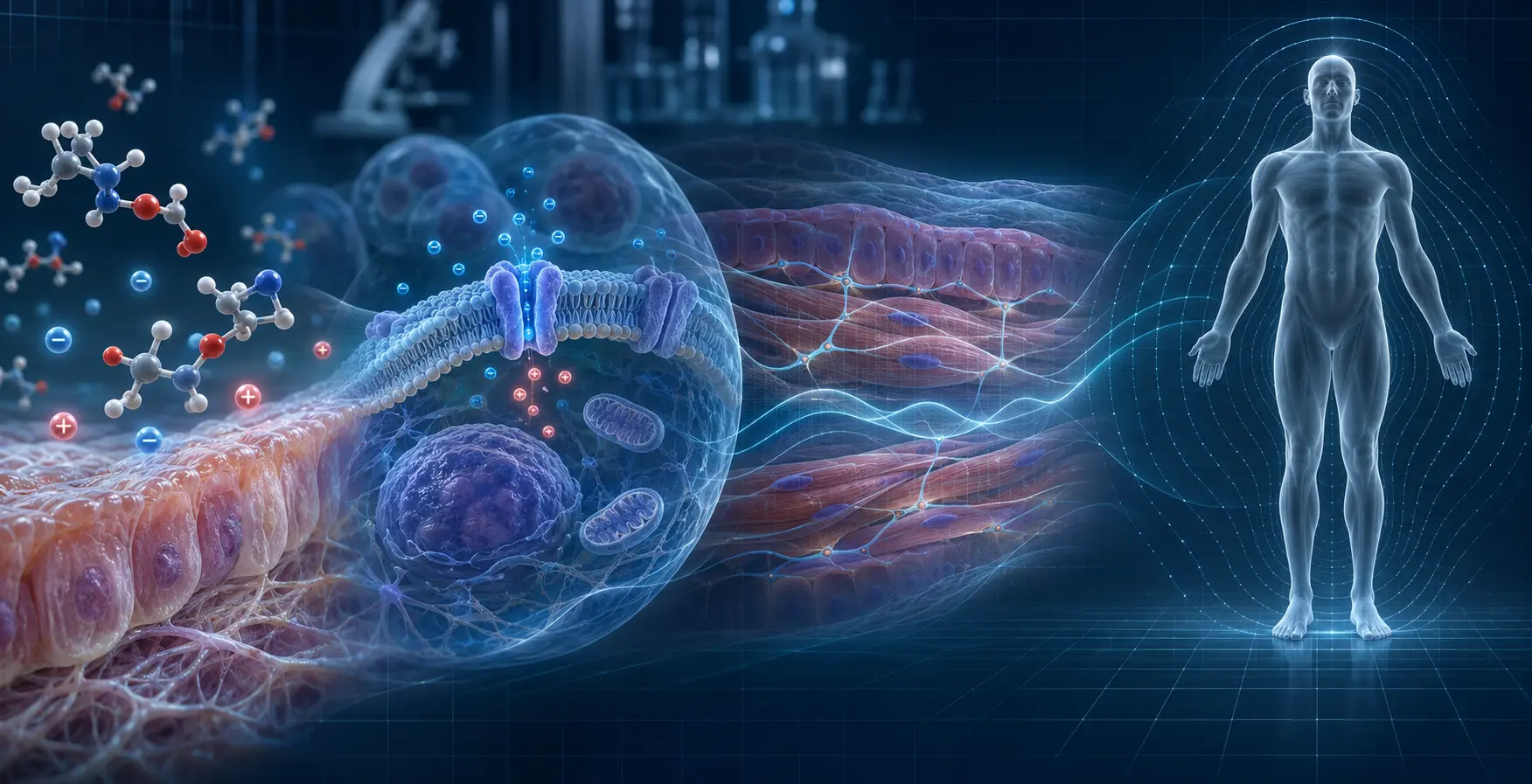 MECHANISM → EVIDENCESIGNAL · TISSUE · SYSTEM
The scientific principle
Cells and tissues maintain ionic gradients, membrane potentials and endogenous currents. In experimental models, physiological electric fields help guide cell migration during epithelial repair. This does not, in itself, prove any specific therapy; it does, however, establish a legitimate basis for investigating bioelectric interfaces and controlled physical environments.[4]
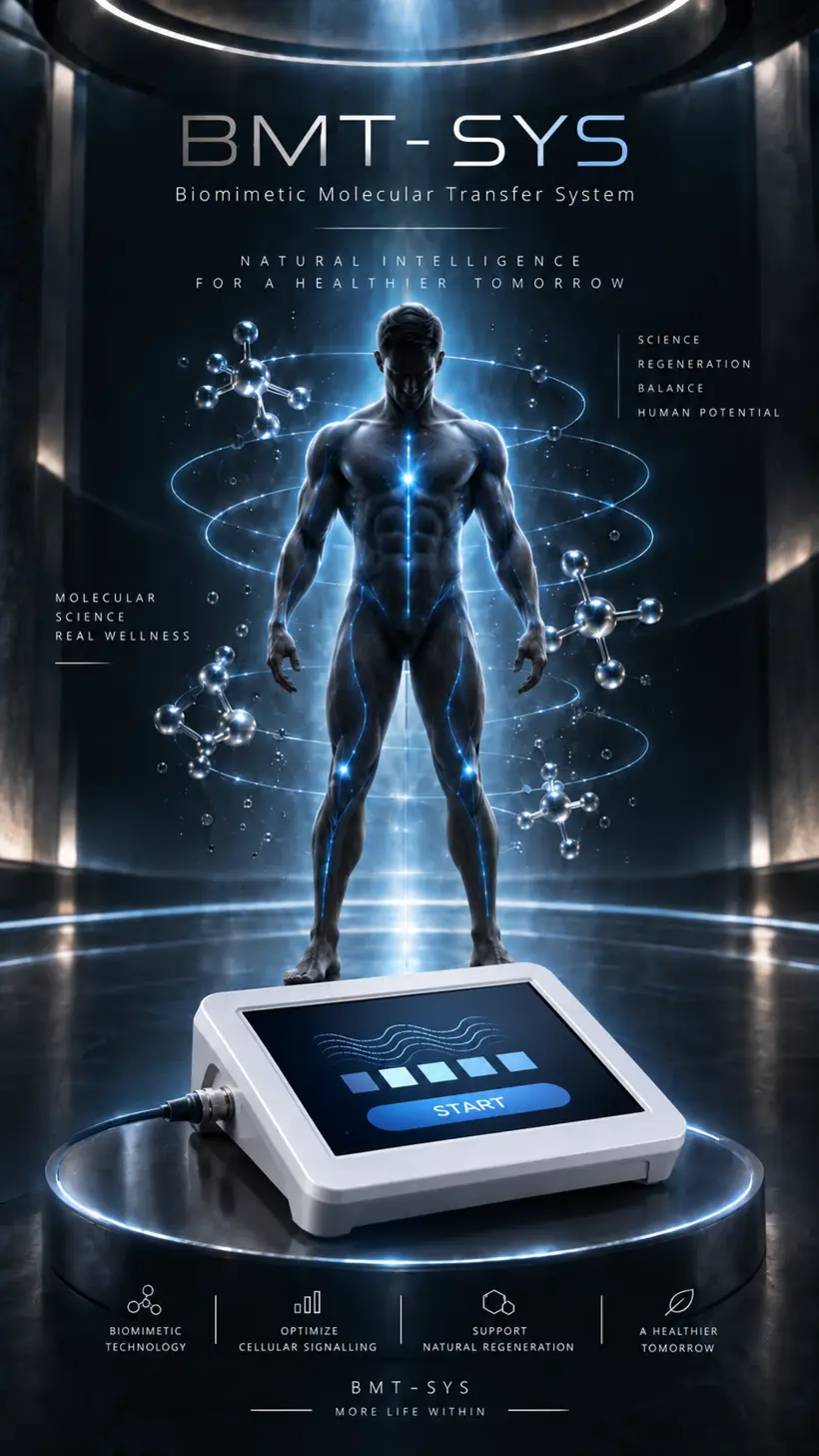
BMT-SYS® brings together three technological strands: assisted transcutaneous transfer, localised bioelectric interaction and distributed whole-body emission. The biomimetic approach lies in how these relationships are organised as a system — not in a claim to replace pharmacology, surgery, rehabilitation or clinical decision-making.
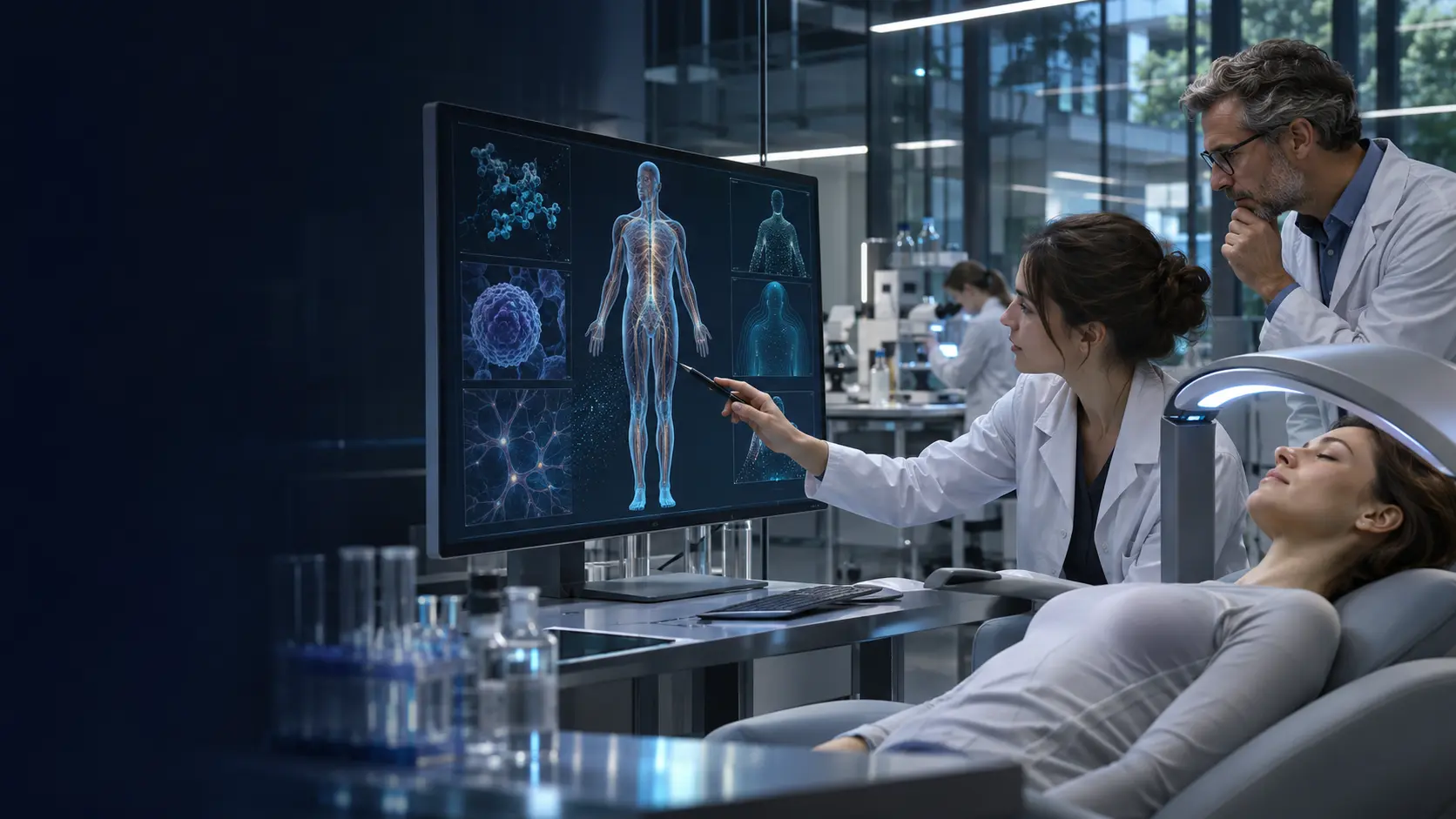
Foundations and technological direction
BMT-SYS® brings together research into electrotransport, bioelectricity and pulsed fields in its own approach to technological integration. The scientific literature provides references for understanding mechanisms, identifying potential applications and guiding the development of professional interfaces.
BMT-SYS research starts from physical modalities with a scientific track record and specific documented applications. The literature and reference devices help establish the potential of each approach.[1]
The studies presented provide insight into observed outcomes, contexts of use and the conditions for applying each modality. An overview that supports informed choices and new research questions.
The BMT-SYS programme develops the relationship between device, applicators, person and context within an evolving biomimetic architecture. Technical characterisation and validation of each configuration form part of that development process.
The cited studies describe the devices, protocols, populations and outcomes of their respective investigations. Demonstrating BMT-SYS’s own performance depends on assessment of its configurations and intended uses.
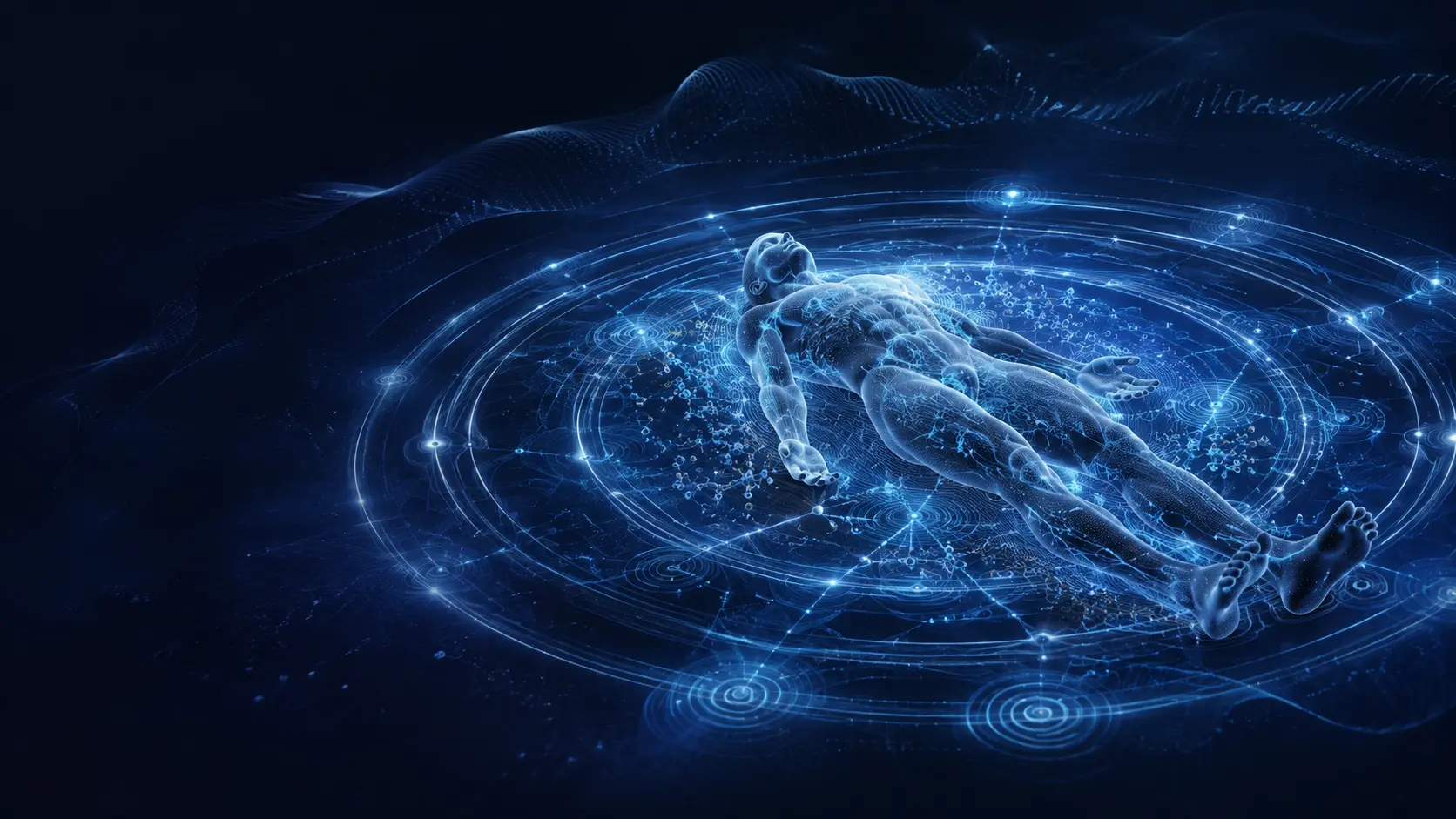
Biomimetic electrophoretic current
The skin is an extraordinarily effective barrier. Iontophoresis uses low-intensity electric current to facilitate movement of ionic or polar species across this barrier. Transport results mainly from electromigration and electro-osmosis, depending on the substance’s charge, size, concentration and formulation, the contact area and skin integrity.
The potential value lies in localised, non-invasive, needle-free application. This does not mean that any molecule can be transported, or that a conventional topical formulation is automatically suitable. Physicochemical compatibility, indication, dose and professional context remain decisive.
A multicentre randomised trial found less pain during venepuncture with iontophoretic administration of lidocaine, although skin reactions and one partial-thickness burn occurred.[5]
Tap-water iontophoresis reduced palmar sweating in a small controlled trial, a use distinct from drug administration.[8]
A split-face study with vitamin C reported signs of improved hydration, texture and pores, but with a small sample and losses to follow-up; this is an exploratory signal, not a universal conclusion.[9]
The BMT-SYS approach
Applicators, coupling media and operating logic designed as a single professional interface.
The session is framed by the indication, local characteristics, substance used and observable response.
Localised transfer may coexist, where technically appropriate, with other interfaces within the BMT-SYS ecosystem.
The platform’s biomimetic identity is a proprietary technological approach; it is not a claim of already proven clinical superiority.
Pulsed electromagnetic fields
Time-varying magnetic fields can induce electrical interactions in tissues without direct electrical contact. Clinical PEMF research covers bone healing, pain, joints, soft tissues, wounds and postoperative recovery, but outcomes vary widely with the signal, equipment, duration, indication and study quality.
The FDA recognises the category of non-invasive bone growth stimulators using electric, magnetic or ultrasonic fields for specific orthopaedic indications; specific PEMF systems also have historical approvals. This demonstrates that the modality may have clinical value, but does not extend that authorisation to any other device or indication.[1][2]
This is the field with the strongest regulatory recognition for specific prescription devices. Equivalence requires its own technical and clinical demonstration.
Trials in knee arthroplasty, caesarean section and breast reconstruction reported favourable signals in pain, inflammation or recovery; a study in dental implant surgery found no significant difference.[10][11][12][13]
Small trials in venous ulcers and diabetic foot reported signs of improvement, but their samples and protocols limit generalisable conclusions.[14][15]
The research remains heterogeneous. A recent osteoarthritis trial found improved extensor strength, but not self-reported function, joint structure or several secondary outcomes.[16]
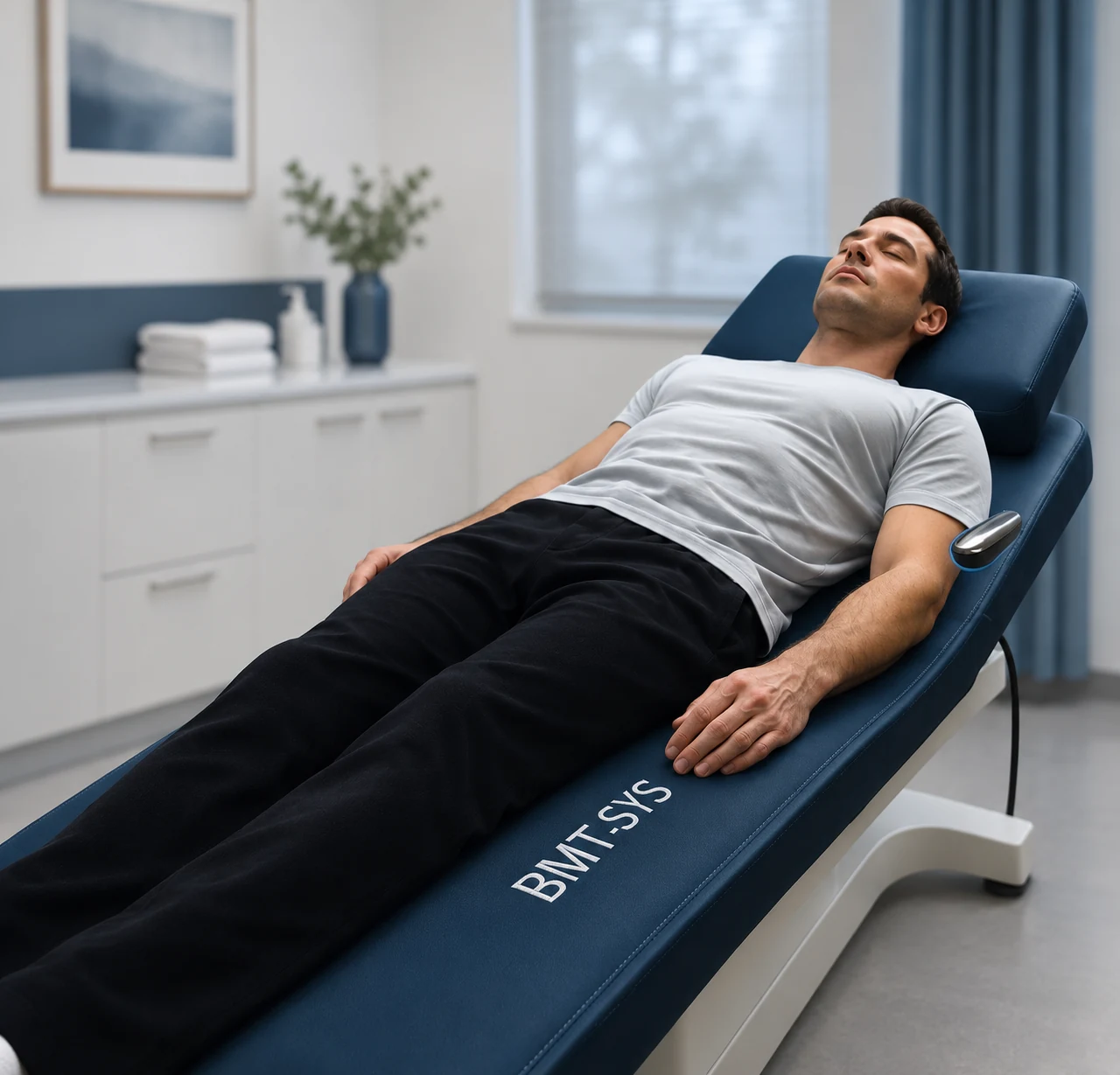
Map of potential utility
The fields below represent reasonable areas for application or research. They do not constitute a list of authorised clinical indications for BMT-SYS®.
| Field | Relevant modality | Professional rationale | Current understanding |
|---|---|---|---|
| Bone and joint recoveryBone · joint · periarticular tissue | PEMF and localised interfaces | Complementary physical support within recovery protocols, always dependent on the indication and device. | Established only for specific uses; other evidence varies |
| Postoperative carePain · oedema · inflammation · comfort | PEMF and selected electrotransport | A possible adjunct to the medical plan for symptom modulation and tissue recovery support. | Positive and negative clinical signals; requires its own protocol |
| Transcutaneous applicationLocalisation · no needles | Electrophoretic current | Facilitating local transport of compatible substances, prescribed or used within an appropriate professional framework. | Principle and specific applications demonstrated |
| Wounds and microcirculationVulnerable tissue · repair | PEMF in studied devices and contexts | Research into local perfusion, comfort and tissue progress as an adjunct to standard care. | Preliminary evidence; never replaces wound treatment |
| Dermatology and functional aestheticsHydration · texture · pigmentation · recovery | Electrotransport and integrated protocols | Aesthetics is approached as a possible visible expression of improved function, fluid balance and tissue quality. | Formulation-dependent; evidence remains limited |
| Distributed whole-body interactionComfort · large area · continuity | TBT and pulsed fields | A large-area physical environment for investigating bodily responses and integration within professional pathways. | BMT-SYS programme under development and validation |
 FUNCTION → RECOVERY → APPEARANCE
Aesthetics as a functional consequence
Oedema, inflammation, hydration, microcirculation, tissue texture and organisation influence appearance. Technologically responsible aesthetics should therefore go beyond “correcting the surface”: it should understand the functional state expressed by that surface.
In post-procedure or postoperative contexts, the aim is not to promise beauty through a physical field. It is to investigate whether a responsible combination of interfaces can support comfort, tissue recovery and continuity of care — and, when recovery occurs, allow the aesthetic outcome to benefit from it.
One platform, different clinical traditions
BMT-SYS® does not replace professional reasoning or automatically validate the substance applied. A formulation’s conceptual origins never remove the need for identity, quality, compatibility, legal compliance and risk assessment.
Use of molecules or pharmacological products only when authorised, compatible with the intended route, and prescribed or applied within professional competences.
Natural, dermocosmetic or wellbeing formulations require known composition, controlled quality, a legally appropriate purpose and assessment of their interaction with the skin and equipment.
Legally admissible preparations may form part of a professional protocol where there is clinical responsibility, traceability and documented compatibility. The equipment does not replace assessment of the evidence for each therapeutic purpose.
Indication, consent, safety, follow-up and measurable outcomes remain common to every philosophy of care.
Safety and responsibility
Electrical application, substance transport and electromagnetic emission require individual assessment, training, documentation and device-specific instructions. Skin integrity, sensitivity, implanted electronic devices, pregnancy, concurrent therapy and the nature of the substance are examples of factors that can alter professional decisions.
European regulation requires safety, performance, undesirable effects and the benefit–risk ratio to be supported by sufficient clinical evidence proportionate to the device’s stated purpose.[3]
The appropriate person, objective and modality.
Skin, sensitivity, implants, medication and specific contraindications.
Product, device, professional, consent and session.
Response, tolerability and stopping criteria.
Outcomes and continuity based on data, not expectation.
Selected external sources
A public, non-exhaustive selection. The studies use different devices, signals, populations and protocols; they do not demonstrate equivalence with BMT-SYS®.
Regulatory category for stimulation using electric, magnetic or ultrasonic fields in specific orthopaedic indications.
Official source ↗ 02 / FDA PMABIOMET EBI Bone Healing SystemOfficial record of a non-invasive PEMF bone growth system, demonstrating a specific historical use of the modality.
Official source ↗ 03 / EUROPEAN UNIONRegulation (EU) 2017/745 — Article 61Requires sufficient clinical evidence for safety, performance, undesirable effects and the benefit–risk ratio.
Official document ↗ 04 / NATURE · 2006Zhao et al. — Electrical signals and wound healingMechanistic study of endogenous electric fields, cell migration and PI3Kγ/PTEN pathways in epithelial repair.
PubMed ↗ 05 / RCTLidocaine iontophoresis for topical anaesthesiaMulticentre, double-blind, controlled trial in adults and children undergoing venous access.
PubMed ↗ 06 / RCTDexamethasone iontophoresis in epicondylitisBenefit mainly in the short term; smaller differences at one-month follow-up.
PubMed ↗ 07 / RCTDexamethasone iontophoresis in plantar fasciitisGreater initial improvement in the active group, with no significant difference at one month.
PubMed ↗ 08 / RCTTap-water iontophoresis in palmar hyperhidrosisRandomised, sham-controlled trial showing reduced sweating and improved quality of life.
PubMed ↗ 09 / SPLIT-FACE TRIALIontophoretic vitamin C deliveryA small exploratory study of photoageing, hydration, texture and pores.
PubMed ↗ 10 / RCTPEMF after total knee arthroplastyFavourable outcomes in pain, oedema and function in a small postoperative recovery study.
PubMed ↗ 11 / RCTPEMF after caesarean sectionPlacebo-controlled study reporting less pain, lower analgesic use and fewer local postoperative signs.
PubMed ↗ 12 / RCTPEMF after breast reconstructionOutcomes in pain, inflammation, exudate and interleukin-1β following TRAM flap reconstruction.
PubMed ↗ 13 / NEGATIVE RCTPEMF after dental implant surgeryFound no significant reduction in pain or oedema, a reminder that outcomes are not universal.
PubMed ↗ 14 / RCTPEMF and recalcitrant venous ulcersHistorical multicentre study reporting improvements in area, depth and pain in venous ulcers.
PubMed ↗ 15 / PILOT RCTPEMF and diabetic foot ulcersA very small pilot showing signals in healing and microcirculation; requires more robust confirmation.
PubMed ↗ 16 / RCT · 2026PEMF in knee osteoarthritisImproved extensor strength, but no differences in WOMAC, joint structure or several functional outcomes.
PubMed ↗The BMT-SYS position
BMT-SYS® starts from real mechanisms and modalities with a scientific history. Its own value will be established through documented engineering, safety, biophysical characterisation and appropriate clinical research — never through promotional extrapolation.
Request a scientific presentation Group
Discover the mission and connections between the brands, technology, training and care network.